

When I think about my own school days, one thing stands out very clearly.
My teachers never beat us, and they rarely shouted at us. Yet there was a natural sense of discipline and respect in the classroom.
Not because we were afraid of punishment.
But because we always thought about one thing:
“What if my teacher tells my parents?”
That thought alone was enough for us to correct ourselves. My classmates and I knew that our parents trusted our teachers. There was a silent partnership between home and school.
Teachers guided us in school, and parents reinforced those values at home.
Today, as both a parent and an educator, I often notice a different pattern emerging.
Sometimes, when children come home and say that the teacher spoke firmly to them, corrected their behaviour, or addressed an issue in the classroom, parents immediately feel the need to intervene or question the teacher.
While parental involvement is important, constant intervention in every small classroom situation may send an unintended message to the child:
“If something uncomfortable happens in school, you don’t have to deal with it. We will handle it for you.”
But the real question we must ask ourselves is — should we always step in?
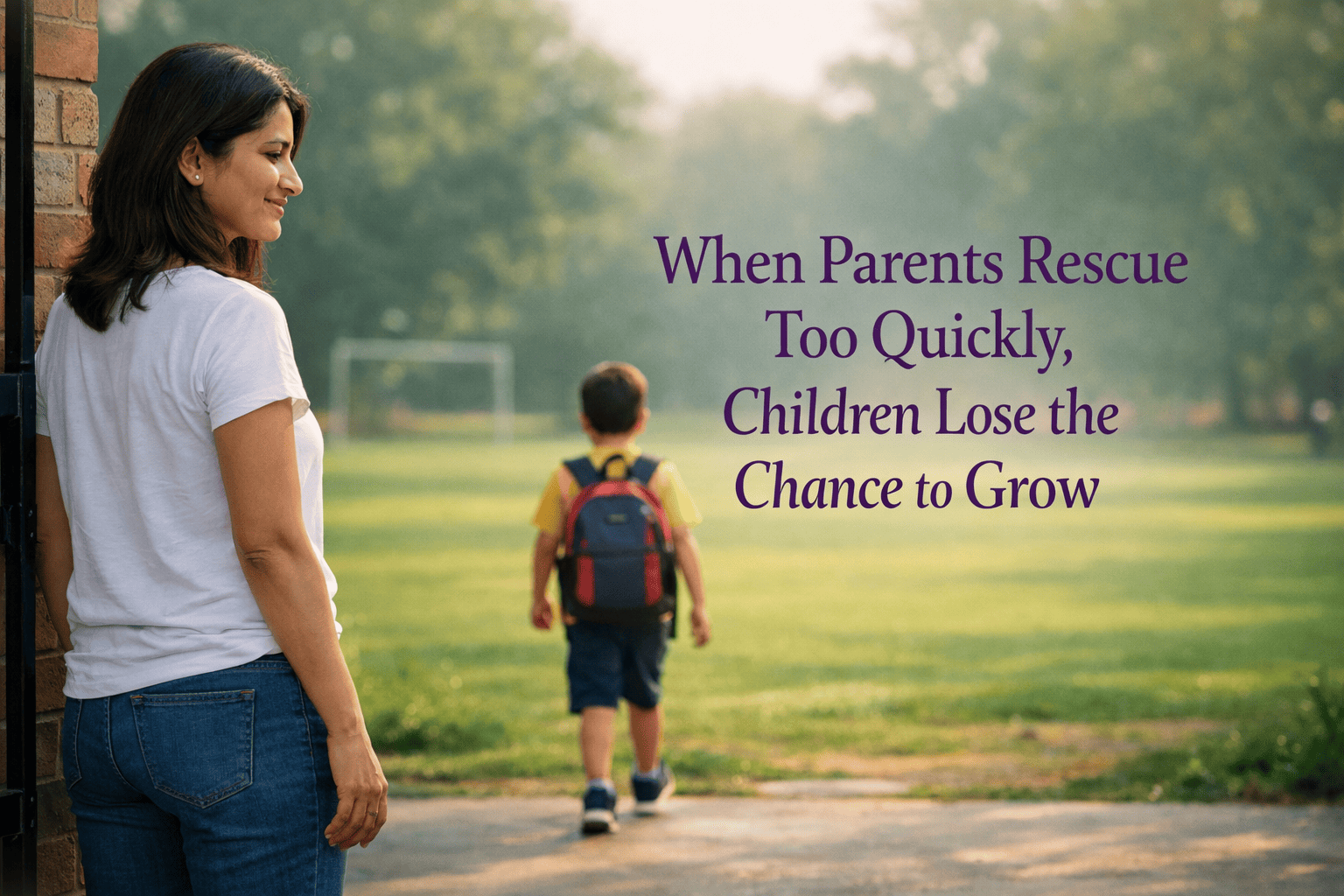
Children need to experience small challenges in order to grow emotionally stronger.
There is a beautiful story that explains this idea perfectly.
A man once saw a butterfly struggling to come out of its cocoon. Feeling sorry for it, he gently helped the butterfly come out.
But within a short time, the butterfly died.
Why?
Because the struggle to break out of the cocoon is what strengthens the butterfly’s wings. Without that struggle, the wings never develop the strength needed to fly.
Sometimes, when we remove every difficulty from our children’s lives, we unknowingly weaken their ability to face challenges.
School is one of the first places where children learn to deal with feedback, discipline, peer interactions, and different expectations. These experiences help them develop resilience, responsibility, and emotional strength.
Of course, there are situations where parents must step in. If there are genuine concerns such as bullying, repeated emotional distress, safety issues, or situations that affect a child’s well-being, parents must absolutely communicate with the school and work together to resolve them.
But when adults intervene in every small discomfort, children may miss the opportunity to learn important life skills such as problem-solving, self-confidence, and emotional resilience.
Teachers guide children in learning, discipline, and behaviour within the school environment.
Parents nurture values, emotional security, and character at home.
When both work together with mutual trust and respect, children benefit the most.
Perhaps as parents we need to pause and reflect:
Are we protecting our children… or are we unintentionally preventing them from becoming stronger?
Because sometimes the greatest gift we can give our children is not protection from every struggle.
It is the confidence that they are capable of handling challenges themselves.