

A small disagreement over a toy. Tears at drop-off. Frustration when something doesn’t go as planned. For young children, everyday moments can bring surprisingly big emotions. And that’s perfectly normal.
Early childhood is a time of discovery, not just of letters, numbers, and the world around them, but also of feelings. Children are still learning how to express themselves, cope with frustration, and find their feet in unfamiliar situations.
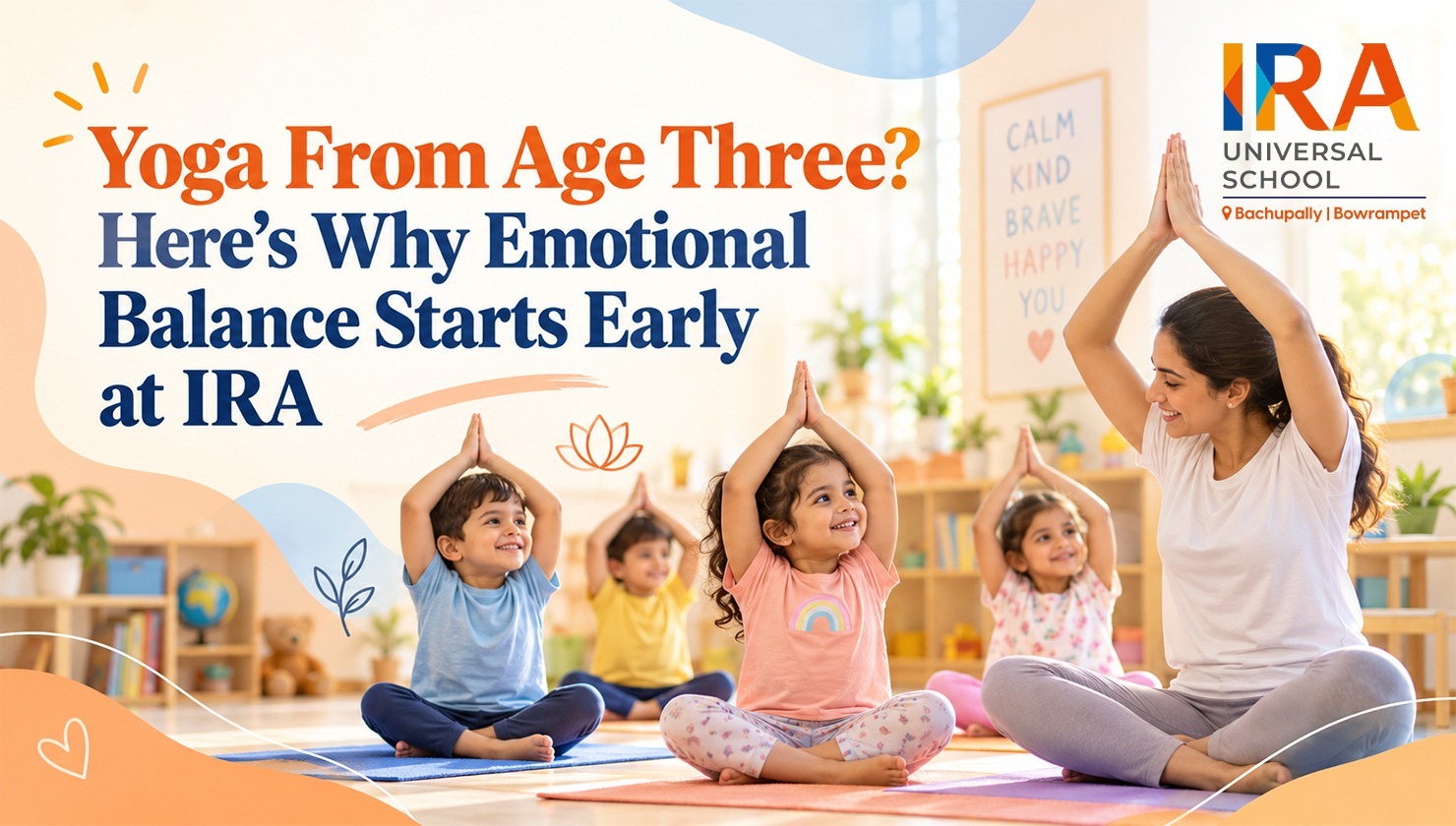
That’s why, at IRA Universal School, well-being is part of learning from the early years, with yoga introduced from age three and PSHE integrated into the learning experience.
Because helping children understand themselves is just as important as helping them understand the world.
Personal, Social, Health and Economic Education (PSHE) helps children develop an understanding of themselves and their relationships with others.
In the early years, this begins with simple, everyday learning: recognising feelings, expressing needs, taking turns, building friendships and understanding how our actions affect others.
These may seem like small lessons, but they shape how children approach new experiences. A child who begins to identify frustration, for instance, gradually learns healthier ways to respond to it. The aim isn’t to prevent children from feeling upset or anxious. It’s to help them understand those feelings and learn how to deal with them.
Young children don’t develop emotional skills overnight. Like reading or riding a bicycle, these abilities grow with practice, patience and support.
Introducing emotional awareness early gives children more opportunities to practise handling everyday challenges. These skills become useful as children encounter new classrooms, friendships, responsibilities and expectations. They may not always know how to respond, but having a foundation to build on can help them navigate these moments more confidently.
For a three-year-old, yoga isn’t about perfect postures or sitting still for long periods. It can be a gentle introduction to movement, breathing, and body awareness.
Simple, age-appropriate practices encourage children to slow down, notice how they feel, and experience moments of calm. With regular guidance, these practices may become useful tools as they learn to navigate everyday emotions.
Every child responds differently, of course. The goal is not to expect constant calm, but to give children supportive ways to reconnect with themselves.
Emotional well-being influences how children participate, build friendships and respond to learning experiences. When children feel supported, they have more room to explore, ask questions and try again.
For parents choosing a school, this matters. The early years are not only about preparing children for the next grade. They are also about helping them feel secure, develop independence, and begin understanding who they are.
When emotional well-being is part of their early education, children begin building skills that support them well beyond their first classroom.
At IRA Universal School, integrating PSHE and yoga from EY3 reflects an approach that looks beyond academic milestones to the child behind them. It includes how they feel, how they connect, and how they grow.
Because a strong foundation is not just about being ready for school. It’s about feeling ready for life.